
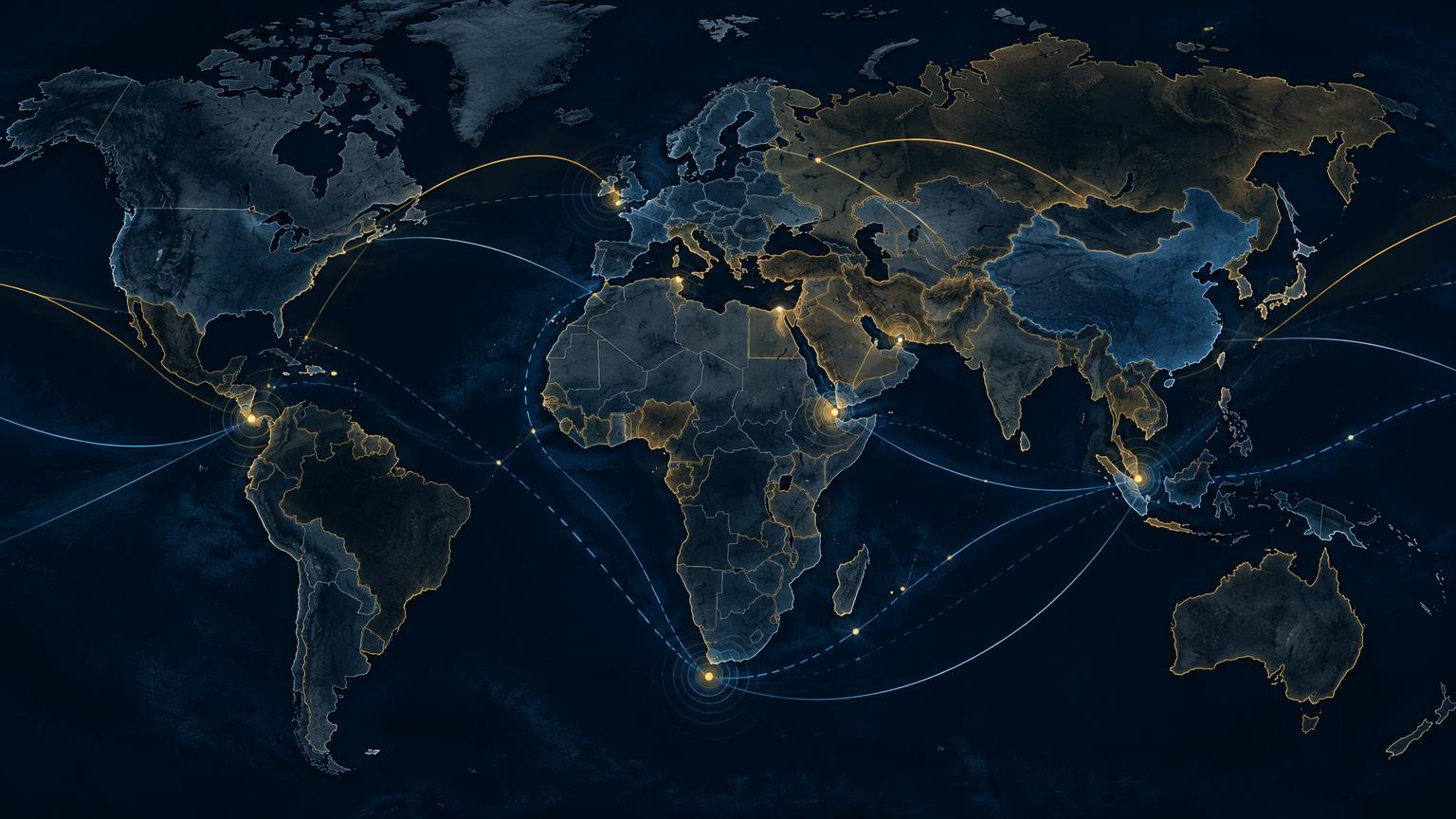
Iran Reportedly Offers 60-Day Regional Ceasefire and Phased Hormuz Reopening Roadmap
Regional sources briefed on U.S.-Iran diplomacy say Tehran has presented Washington with a roadmap proposing a region-wide ceasefire of up to 60 days, phased reopening of the Strait of Hormuz, an end to the U.S. blockade, and a timetable for broader negotiations. No agreement has been announced, and key U.S.-Iran differences remain unresolved.
- Published
- Updated
- Revision
- r497283
- Source
- Gulf News
Cliff Notes
- Iran has reportedly presented a 60-day region-wide ceasefire roadmap to the U.S.
- The proposal includes phased reopening of the Strait of Hormuz and ending the U.S. blockade.
- This is not yet an agreement; major differences remain and implementation is unconfirmed.
- If accepted and executed, the framework could materially reduce oil, shipping and inflation risk premiums.
Iran has reportedly put a more detailed de-escalation framework before the United States during diplomacy around the UN General Assembly. The reported proposal is material because it combines a temporary region-wide ceasefire with phased restoration of traffic through the Strait of Hormuz, the central chokepoint behind the current energy and shipping shock. The development is a negotiating proposal, not a ceasefire or reopening order. Confirmation of acceptance, implementation sequencing, sanctions terms, maritime security arrangements and Iranian/U.S. compliance is still absent.
ELI5: Plain-English Explanation
Iran and the United States are still fighting, but Iran has reportedly offered a step-by-step plan to pause fighting for up to two months and gradually reopen one of the world's most important oil-shipping routes. The important part is that this is only a proposal so far, not peace yet.
Why Urgent Level 3
The Strait of Hormuz is a systemically important energy chokepoint. A credible path toward reopening could rapidly reprice crude oil, refined products, shipping, inflation expectations, sovereign rates and risk assets; failure could reverse that move just as quickly.
What Changed
Regional sources now describe a concrete Iranian roadmap combining a region-wide ceasefire of up to 60 days, phased Hormuz reopening and a timetable for broader negotiations, following direct/mediated contacts around the UN General Assembly.
What Is Genuinely New
The material novelty is the reported structure of the roadmap: a region-wide ceasefire, phased reopening of Hormuz, and broader negotiation timetable presented together as a negotiating package. Earlier Iranian comments had expressed willingness to pursue diplomacy and conditional reopening, but did not establish that this specific package had been presented to Washington.
CHRONOS Bottom Line
This is the clearest current diplomatic mechanism for reducing the Hormuz-driven global energy shock, but it remains a proposal. Treat de-escalation as plausible rather than achieved until Washington and Tehran publicly confirm terms and maritime traffic measurably normalizes.
Direct Effects
- Potential reduction in the geopolitical risk premium embedded in crude oil and refined products if negotiations advance.
- Potential restoration of Gulf shipping capacity through a phased reopening of the Strait of Hormuz.
- Reduced immediate attack risk for Gulf states if a region-wide ceasefire is accepted.
Indirect / Second-Order Effects
- Lower energy prices could ease global inflation pressure and reduce expected monetary-policy tightening.
- Shipping insurance and freight costs could fall if physical security improves.
- Energy-importing economies could see improved trade balances while oil exporters could lose some war-driven price support.
- Risk assets could benefit from de-escalation while defense and energy volatility could remain elevated during negotiations.
Market Reality Gap
Oil prices eased after renewed diplomatic signals but remained above $100 Brent, indicating markets are assigning meaningful probability to talks without pricing a durable settlement. The persistence of a large energy risk premium is consistent with unresolved execution risk.
Negative Evidence / Invalidation
- No signed ceasefire or final U.S.-Iran agreement has been announced.
- The United States and Iran remain divided over the conditions for ending hostilities.
- Iranian leadership continues to reject U.S. pressure publicly, and military options remain in the background.
- Previous ceasefire and negotiating arrangements have broken down, demonstrating high implementation risk.
Resilience / Shock Absorbers
- Saudi efforts to restore East-West pipeline exports can partially bypass Hormuz constraints.
- Strategic inventories, demand adjustment and alternate crude flows provide limited buffers against prolonged disruption.
- Mediators including Qatar and Pakistan provide established channels for indirect negotiation.
Shock Absorbers
- Alternative pipelines and rerouting can offset part, but not all, of constrained Gulf maritime exports.
- A phased rather than immediate reopening could reduce operational and security risk during normalization.
Confirmation Signals
- Public U.S. confirmation that the roadmap is an accepted basis for negotiations.
- A jointly announced ceasefire timetable.
- Verified reduction in U.S.-Iran military operations.
- Published maritime reopening procedures and measurable increases in commercial tanker transits through Hormuz.
- Lower war-risk insurance premiums and sustained decline in Brent/refined-product risk premiums.
Invalidation Signals
- U.S. rejection of the roadmap or Iranian withdrawal.
- Renewed large-scale U.S. or Iranian strikes.
- Additional restrictions, mining, seizures or attacks affecting Hormuz shipping.
- Breakdown of mediator-led talks without a replacement diplomatic channel.
What Would Prove CHRONOS Wrong
The de-escalation thesis would be wrong if the reported roadmap is rejected, materially mischaracterized, or followed by renewed military escalation that further restricts Hormuz rather than reopening it.
What Would Raise This to Level 4
- Talks collapse and either side resumes major strikes.
- Hormuz restrictions expand or commercial vessels are attacked/seized.
- Regional actors enter the conflict more directly.
- Energy infrastructure suffers new material damage.
What Would Lower This Alert
- Both sides publicly accept a ceasefire framework.
- Military activity falls materially and stays lower.
- The U.S. blockade is eased according to an agreed sequence.
- Verified commercial shipping resumes through Hormuz at rising volumes.
Watch Windows
- Next 6-12 hours: U.S. and Iranian official responses around UNGA diplomacy.
- Next 24-72 hours: mediator statements, follow-up meetings and evidence of military restraint.
- Next 7 days: any operational reopening of Hormuz, consistent with earlier Iranian statements that reopening could occur within a week if conditions are met.
Uncertainties / Known Unknowns
- The detailed roadmap is reported through regional sources rather than a published joint document.
- The exact sequencing of blockade relief, ceasefire steps and maritime reopening is not public.
- It is unclear whether all Iranian security institutions support the proposal.
- No durable compliance or verification mechanism has been announced.
Detailed Analysis
The reported roadmap converts broad diplomatic willingness into a more concrete negotiating structure. Its systemic importance comes from linking military de-escalation directly to Hormuz, where disruption has propagated into oil, diesel, inflation and monetary-policy expectations.
Section
Regional sources say Iran proposed a ceasefire of up to 60 days, phased Hormuz reopening, an end to the U.S. blockade and a timetable for wider negotiations. The proposal follows contacts around the UN General Assembly.
Section
Hormuz remains the key transmission channel from the conflict into the global economy. Even partial normalization could reduce crude, refined-product, freight and insurance premiums, while a breakdown would preserve or increase them.
Section
Persistently high energy prices are feeding inflation concerns and tighter-rate expectations in multiple economies. Durable de-escalation would weaken that channel; renewed conflict would reinforce it.
Section
The framework is not yet an agreement. Previous U.S.-Iran arrangements have broken down, so implementation evidence matters more than negotiating language alone.
Affected Countries
- Iran
- United States
- Qatar
- Pakistan
- Saudi Arabia
- Oman
Affected Industries
- Energy
- Oil & Gas
- Shipping
- Insurance
- Airlines
- Chemicals
- Transportation
Affected Assets
- Brent crude
- WTI crude
- European gasoil
- U.S. Treasuries
- U.S. dollar
- Gulf shipping rates
Sources / Evidence
- 01Iran presents 'roadmap' that includes 60-day regionwide ceasefire: reportGulf News2026-09-24
- 02Iran 'presents US with road map for regionwide ceasefire and Hormuz reopening'The National2026-09-23
- 03