
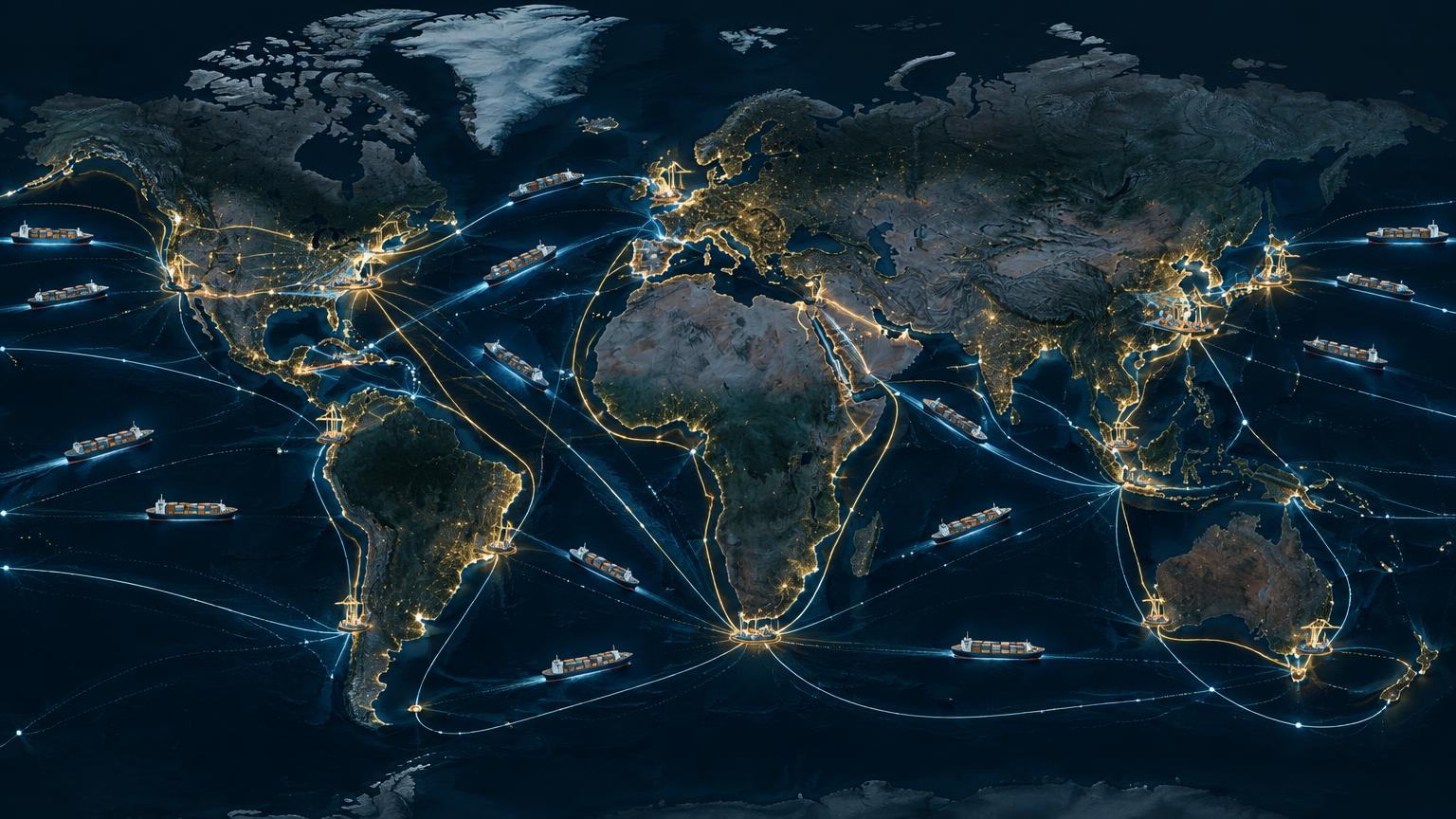
Maersk raises emergency fuel surcharge to 20% from October 12 amid Middle East disruptions
Event summary
Maersk announced that its emergency fuel surcharge on export collections and import deliveries will rise to 20% from October 12, 2026, making shipping-cost pass-through more explicit amid fuel volatility and Middle East conflict.
CHRONOS Wire · October 8 · Alert 31
Publication details
- Published
- Updated
- Revision
- r497625
- Source
- Reuters
Cliff Notes
- Maersk says a 20% emergency fuel surcharge will apply from October 12 to affected export collections and import deliveries.
FACT: Reuters reported at 07:32 UTC on October 8 that Maersk said it was increasing its emergency fuel surcharge (EFS) to 20% effective October 12 on export collections and import deliveries, with regular review. CONTEXT: Gulf and Strait of Hormuz shipping attacks, elevated fuel prices and hurricane-related U.S. Gulf oil shut-ins compound logistics pressures. ANALYSIS: The announced increase can raise landed costs for affected shippers and potentially downstream prices; the exact incremental cost varies by service, contract and geography. This is a pricing announcement, not proof of cancelled cargo movements.
ELI5: Plain-English Explanation
A large shipping company says transporting goods will cost more because fuel has become expensive and uncertain. Some of that extra expense may be passed to businesses buying and selling goods.
Why Urgent Level 3
The announced effective date is October 12; importers and exporters may need to reassess near-term freight budgets and contractual exposure.
What Changed
The carrier announced a specific 20% surcharge level and implementation date.
What Is Genuinely New
A concrete new tariff on logistics services replaces general discussion of higher fuel costs; not simply a restatement of tanker attacks.
CHRONOS Bottom Line
A measurable logistics-cost increase is announced, but its global pass-through and duration are not yet established.
Direct Effects
- Higher emergency fuel surcharge for shipments within the stated export-collection/import-delivery scope from October 12.
- Immediate review of transport quotes, contract clauses and shipment margins.
Indirect / Second-Order Effects
- Potential pressure on importers' landed costs and some consumer prices if passed through.
- Possible route or modal shifts where contracts and alternative services permit.
Market Reality Gap
Energy and maritime risk is widely reported, but a 20% named surcharge is a separately actionable cost change. Do not infer that all Maersk container freight rates globally increase by 20%.
Negative Evidence / Invalidation
No evidence that Maersk is suspending all operations or that all cargo is affected identically. Alternative carriers and contractual fuel mechanisms can limit pass-through.
Confirmation Signals
- Carrier customer advisories showing effective routes and fee calculation.
- Invoices or freight quotes applying the new rate from October 12.
Invalidation Signals
- Maersk formally withdraws or materially revises the announcement.
- The reported 20% figure is clarified as unrelated to the stated affected services.
What Would Prove CHRONOS Wrong
The carrier reverses the decision before implementation or the 20% charge is shown to apply to a materially different scope.
What Would Raise This to Level 4
- Additional major carriers impose comparable increases.
- Fuel constraints cause service suspensions or wider logistics bottlenecks.
What Would Lower This Alert
- Carrier lowers or cancels the surcharge.
- Sustained fuel availability and security improvements reduce freight premiums.
Watch Windows
- October 8-12: official carrier customer notices and scope.
- October 12-19: implementation and competitor response.
Uncertainties / Known Unknowns
- Exact geographic and contractual scope of the 20% EFS.
- Incremental change from the preceding surcharge and actual shipper pass-through.
Detailed Analysis
This is an announced freight-pricing response to sustained fuel and maritime security risks, rather than independent proof of a new physical supply outage.
Section
Reuters reports a Maersk statement setting the EFS at 20% effective October 12, subject to regular review.
Section
Fuel-cost volatility and shipping insecurity can raise operating costs; the surcharge transfers some exposure to customers.
Section
No shipment-level invoices, universal applicability, or measured inflation pass-through have been independently established.
Affected Countries
- Denmark
Affected Industries
- Container shipping
- Logistics
- Import and export trade
Affected Companies
- A.P. Moller-Maersk
Affected Assets
- Container freight services
- Bunker fuel