
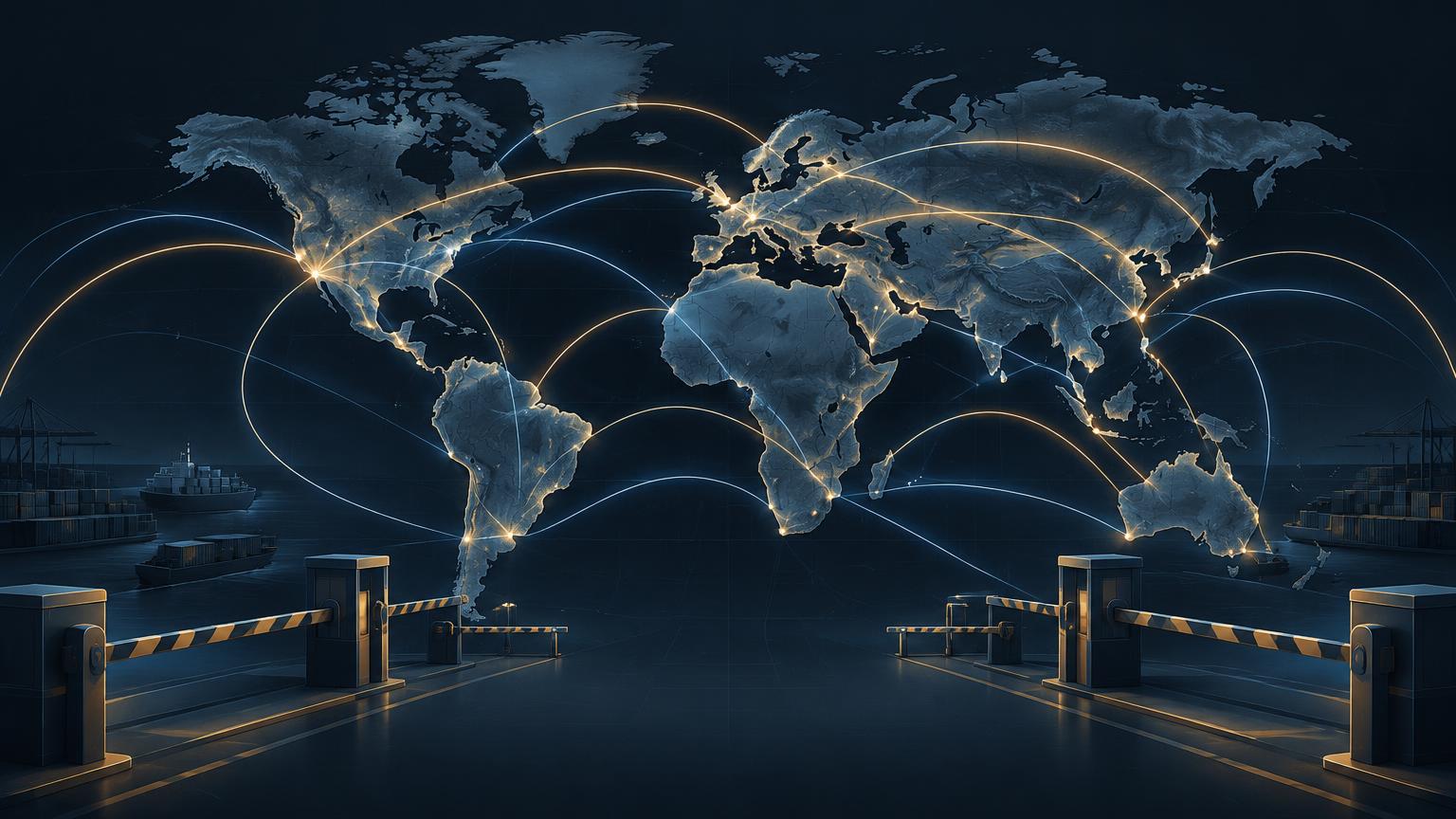
U.S. Treasury sanctions 17 vessels in new action against Iran's shadow fleet
Event summary
The U.S. Treasury on October 8 formally designated 17 vessels and associated networks connected to Iranian petroleum transport under Operation Economic Outcast. The scope of actual additional oil-flow disruption remains uncertain amid an existing blockade.
CHRONOS Wire · October 9 · Alert 14
Publication details
- Published
- Updated
- Revision
- r497645
Cliff Notes
- Treasury formally sanctioned 17 vessels tied to Iranian oil transport. This is a new implemented action, not a proposal, but incremental oil-market effects remain uncertain because shipping was already heavily constrained.
U.S. Impact
Current impact
Low
The direct U.S. effect is a new sanctions compliance and enforcement requirement; the incremental domestic oil-price effect is not yet established.
Potential impact
Low
Broader enforcement or retaliation could increase shipping and energy-market friction, although existing restrictions and alternative supply limit incremental effects.
- Impact type
- Mixed
- Time horizon
- Immediate to weeks
- Confidence
- Very High
- Key channels
- Sanctions compliance · Oil prices · Maritime finance
U.S. Impact is an analytical assessment of the estimated current and potential effects on the United States. It is not a probability forecast.
The U.S. Treasury announced new sanctions on October 8 against 17 vessels and associated owners or networks involved in transporting Iranian crude oil, petroleum products and petrochemicals. The Treasury described the action as targeting most of Iran's remaining shadow-fleet infrastructure, but that effectiveness claim is the U.S. government's assessment rather than an independently measured outcome. Reuters reported that U.S. officials estimated about 20 million barrels of Iranian crude remained afloat outside the blockade. The sanctions add legal and financial constraints to already restricted shipping flows; analysts noted that immediate marginal supply impact could be muted if most shipments were already curtailed.
ELI5: Plain-English Explanation
The U.S. added more ships and businesses to its sanctions list to make it harder to move Iranian oil. That changes legal restrictions immediately, but may not remove much more oil from markets if shipments had already stopped.
Why Urgent Level 3
Formal designations immediately alter sanctions compliance obligations for affected maritime, insurance and financial counterparties.
What Changed
Treasury's October 8 action designated 17 vessels and related parties, adding a new enforceable measure to existing sanctions and blockade policy.
What Is Genuinely New
A formal sanctions designation, with specifically named vessels and networks, is a policy implementation rather than repeated discussion of possible measures.
CHRONOS Bottom Line
The legal sanctions action is confirmed; the claim of decisive impact on remaining oil transport should be tested against subsequent shipping data.
Direct Effects
- New sanctions designations affecting 17 vessels and associated parties.
- Expanded compliance exposure for firms transacting with designated entities.
Indirect / Second-Order Effects
- Potential rerouting and additional maritime compliance costs.
- Possible pressure on Iran's oil revenues and regional diplomatic negotiations.
Market Reality Gap
Sanctions are enforceable now, but immediate incremental supply loss may be smaller than the headline suggests because the blockade had already constrained exports.
Negative Evidence / Invalidation
Analysts quoted by Reuters questioned incremental effectiveness; existing blockade conditions had already curtailed oil loadings and shipments.
Confirmation Signals
- Official designations and updated compliance guidance.
- Verified declines in residual Iranian oil shipments beyond prior baseline.
- Documented seizures or enforcement actions.
Invalidation Signals
- Shipping data show no incremental disruption relative to existing blockade.
- Designations are modified, lifted or exempted under an agreement.
What Would Prove CHRONOS Wrong
If residual oil transport continues largely unchanged despite the new designations, claims of a major incremental supply shock would be disproven.
What Would Raise This to Level 4
- Broader enforcement against insurers, ports or financial intermediaries.
- Verified additional supply losses.
- Further breakdown of U.S.-Iran talks.
What Would Lower This Alert
- Sanctions relief under a verifiable diplomatic agreement.
- Restored lawful oil transport and transparent compliance guidance.
Watch Windows
- Next 24-72 hours for designation implementation and responses.
- Next 1-2 weeks for tanker tracking and oil-flow effects.
- Upcoming U.S.-Iran diplomatic statements.
Uncertainties / Known Unknowns
- Incremental volume affected beyond the existing blockade.
- Third-country enforcement and compliance response.
- Durability of diplomatic negotiations.
Detailed Analysis
A verifiable policy action has occurred; market magnitude requires separate evidence.
Affected Countries
- United States
- Iran
- China
- Malaysia
- Singapore
Affected Industries
- Energy
- Maritime shipping
- Insurance
- Banking
Affected Assets
- Brent crude
- WTI crude
- Tanker freight